Source Halogen Rear Car Tail Light for Trucks, Cars, and Motorcycles
Find and compare 30 Halogen Rear Car Tail Light options from verified suppliers. Buyers can evaluate specifications like voltage, base type, and certifications including E-mark and DOT for automotive and motorcycle applications.
Key considerations
Products List


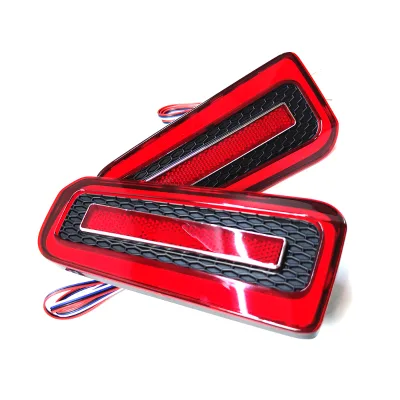

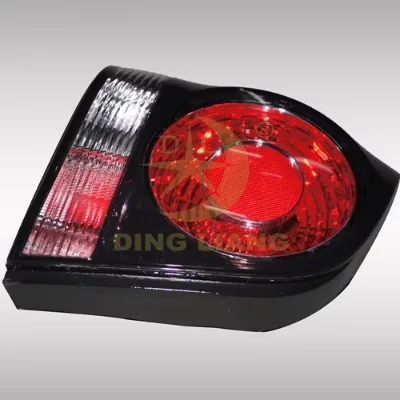
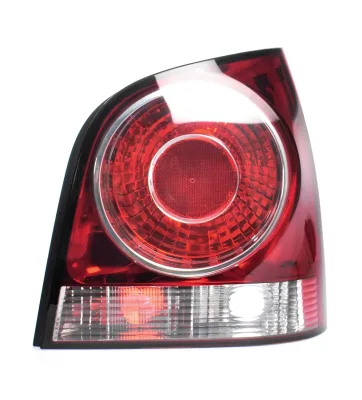
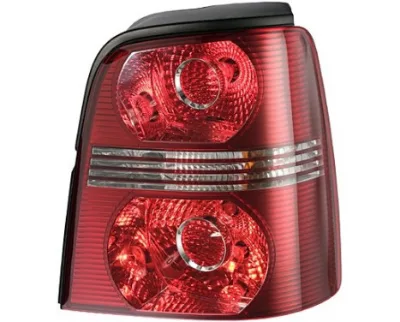


Factory Price Car LED High Brightness Turn Signal Tail Light Rear Stoplight
$2.51 - $2.82
MOQ: 400 Pieces

Comprehensive Sourcing Guide
Strategic Sourcing Guide for Halogen Rear Car Tail Lights
Navigating the global market for halogen rear car tail lights requires a disciplined approach that balances technical specifications, regulatory compliance, and supply chain reliability. For procurement professionals, the core keyword "Halogen Rear Car Tail Light" represents a category defined by specific material constraints, distinct electrical requirements, and rigorous safety standards. The following guide synthesizes observed market data and technical attributes to provide a structured framework for evaluating potential suppliers and products. Buyers must distinguish between general product categories and specific model requirements, as the market contains a diverse array of configurations ranging from standard automotive replacements to specialized motorcycle and trailer applications.
Technical Specifications and Material Composition
The foundational element of sourcing halogen tail lights lies in understanding the precise material and electrical specifications. Based on current market observations, the primary material for the bulb component is explicitly identified as Halogen. This distinguishes these units from LED alternatives, which are also prevalent in the market but operate on different principles. The housing and lens materials vary, with Quartz glass noted as a specific attribute for certain high-performance or specialized bulb types, offering superior heat resistance and light transmission properties compared to standard glass.
Electrical compatibility is paramount. The standard voltage for the majority of these units is 12V, aligning with conventional automotive electrical systems. However, buyers must verify the specific base type for each application. Observed data indicates a variety of bases, including P21/5W, P27W, and H5W. The P21/5W base is frequently associated with dual-filament bulbs used for combined tail and brake functions, while P27W and H5W bases serve specific single-filament or specialized lighting roles. The light color output is another critical specification; while Warm White is a common observation for standard halogen filaments, Amber and Clear options are also available depending on the intended function, such as turn signals versus brake lights.
| Attribute Category | Observed Specifications | Verification Requirement |
|---|---|---|
| Material | Halogen, Quartz Glass | Confirm glass type for heat resistance |
| Voltage | 12V | Verify system compatibility |
| Base Types | P21/5W, P27W, H5W | Match vehicle socket requirements |
| Light Color | Warm White, Amber, Clear | Ensure compliance with local traffic laws |
| Model Standards | HPC19W, 3156, 3157, 408032 | Cross-reference with OEM part numbers |
Regulatory Compliance and Certification Landscape
Compliance is the most critical risk factor in automotive lighting procurement. The market data reveals a complex landscape of certifications that vary by region and application. For products targeting the North American market, DOT (Department of Transportation) certification is a mandatory observation. In the European context, E-mark certification is the standard requirement. Furthermore, a broader range of certifications is observed for global suppliers, including CCC (China Compulsory Certification), GOST (Eurasian Economic Union), SONCAP (Nigeria), PVOC (Saudi Arabia), NRCS (South Africa), GCC (Gulf Cooperation Council), and ARAI (India).
It is essential to note that not every listed product possesses every certification. Buyers must explicitly verify that the specific unit they are purchasing carries the certifications required for their target market. For instance, a product listed with ISO9001 certification is noted specifically for motorcycle lights, indicating that quality management systems may vary by product line. Additionally, standards such as HPC19W and 3156 are observed as product standards, while others like LED TRAILER LIGHT suggest a specific application category that may differ from standard passenger vehicle requirements. The presence of E-mark and DOT on a single listing suggests a product designed for dual-market compliance, but this must be confirmed on a per-unit basis.
Cost Drivers and Procurement Economics
Understanding the cost structure of halogen tail lights requires analyzing the interplay between Minimum Order Quantity (MOQ), customization, and packaging. The observed MOQ range in the market is extensive, spanning from 1 unit to 8000 units. However, specific product listings frequently cite an MOQ of 100PCS or 1000PCS, indicating that bulk pricing tiers are significant. The unit price range observed is $0.12 to $634, a vast disparity that reflects differences in product complexity, material quality, and order volume.
Customization is a key value driver. The attribute Customization: Available suggests that buyers can request modifications to the product, which will inevitably impact the unit cost and lead time. Packaging also influences the final landed cost. Options range from 1 PCS/Box and Color Box to Neutral Package and Side Blisters. For retail-ready products, color boxes are preferred, whereas bulk industrial shipments often utilize neutral packaging to reduce costs. Buyers should be aware that while the base price of a halogen bulb may be low, the cost of specialized packaging, certification testing, and customization can significantly alter the total procurement budget.
Typical Applications and Vehicle Compatibility
The application of halogen rear lights extends beyond standard passenger cars. The market data highlights several distinct use cases. Automobile Tail Light and High Mount Brake Light are primary applications for passenger vehicles, with specific mentions of compatibility with Volkswagen models. The Placement attribute is crucial; for example, a High Mount Brake Light serves a different safety function and regulatory requirement than a standard rear tail light.
Beyond passenger cars, the data explicitly identifies Motorcycle Light applications, often associated with ISO9001 certification and specific standards like For Mexico 150Z. This indicates that a single supplier may offer products for multiple vehicle classes, requiring buyers to be precise about the intended vehicle make and model. Additionally, LED TRAILER LIGHT standards are observed, suggesting that while the core keyword is "halogen," some suppliers may offer hybrid or specialized trailer lighting solutions that require careful differentiation. The Function attribute, such as Back Position Lamp, further clarifies the specific role of the light within the vehicle's lighting system.
Supplier Evaluation and Quality Assurance
Evaluating suppliers for halogen tail lights requires a focus on origin, warranty, and quality control mechanisms. The primary production locations observed are China, with specific hubs in Ningbo, Zhejiang and Jiangsu. These regions are known for their manufacturing capabilities, but buyers must verify the specific factory standards. A 2-year Warranty is an observed attribute for certain high-quality units, serving as a proxy for manufacturer confidence in product longevity.
Quality control should extend beyond the product itself to the supply chain. The Sample: Free attribute indicates that some suppliers offer pre-production samples for evaluation, a critical step in verifying the physical attributes of the halogen bulb, the clarity of the quartz glass, and the fitment of the base. Buyers should utilize these samples to test for Waterproof resistance, an attribute explicitly listed for several products. This is particularly important for rear lights exposed to the elements. When evaluating a supplier, buyers should request documentation for the specific certifications claimed, such as DOT or E-mark, rather than accepting general company certifications.
Long-Term Procurement Considerations
Sourcing halogen rear lights is not merely a transactional exercise but a strategic decision involving long-term supply chain stability. The MOQ of 100PCS or 1000PCS suggests that buyers need to forecast demand accurately to avoid inventory bloat or stockouts. The availability of Customization allows for future-proofing, enabling buyers to adapt to changing vehicle models or regulatory shifts without switching suppliers entirely.
However, the transition to LED technology is a market trend that buyers must monitor. While the current focus is on Halogen materials, the presence of LED attributes in the same dataset (e.g., LED Brake Light, 40LED specifications) indicates a shifting market. Buyers should assess whether their current halogen requirements are for legacy vehicle support or if they should consider a phased transition to LED solutions for improved efficiency and longevity. The Warranty period and the availability of Free Samples are key indicators of a supplier's commitment to long-term partnership. A supplier offering a 2-year Warranty and free samples demonstrates a higher level of confidence in their product's durability compared to those offering minimal guarantees.
In conclusion, successful procurement of halogen rear car tail lights depends on a rigorous verification of technical specs, regional certifications, and supplier capabilities. By focusing on the specific attributes of 12V voltage, Halogen material, and the correct Base type, and by demanding proof of DOT or E-mark compliance, buyers can mitigate risk and ensure the safety and reliability of their automotive lighting components. The diversity of the market, from Volkswagen specific parts to Motorcycle lights, requires a tailored approach for each procurement need, ensuring that the final product meets all functional and regulatory requirements.
FAQs
What certifications are required for halogen rear car tail lights?
Required certifications include DOT for North America and E-mark for Europe. Some suppliers also provide CCC, GOST, SONCAP, and ARAI certifications for global markets, but buyers must verify specific unit compliance for their target region.
Which base types are available for halogen rear car tail lights?
Common base types include P21/5W, P27W, and H5W. The P21/5W base is often used for dual-filament functions, while P27W and H5W serve specific single-filament roles, so matching the vehicle socket is essential.
Can I find halogen rear car tail lights with quartz glass?
Yes, some products feature quartz glass for superior heat resistance and light transmission. This material is distinct from standard glass and is often found in specialized or high-performance bulb types within the halogen category.
What is the typical MOQ for sourcing halogen rear car tail lights?
The observed MOQ range spans from 1 to 8000 units, with common listings requiring 100 or 1000 pieces. Buyers should check specific product pages as bulk pricing tiers significantly influence the minimum order quantity.
How do I verify the waterproof resistance of these lights?
Waterproof resistance is an explicit attribute for several listed products. Buyers should request free samples to physically test the unit's ability to withstand moisture, ensuring it meets the required durability standards for rear lighting.
Which voltage do halogen rear car tail lights typically operate at?
The standard voltage for the majority of these units is 12V, aligning with conventional automotive electrical systems. Buyers must verify system compatibility to ensure the bulb functions correctly within the vehicle's specific electrical architecture.
What warranty periods are available for halogen rear car tail lights?
A 2-year warranty is an observed attribute for certain high-quality units. This warranty period serves as a proxy for manufacturer confidence in product longevity and should be confirmed during supplier evaluation.